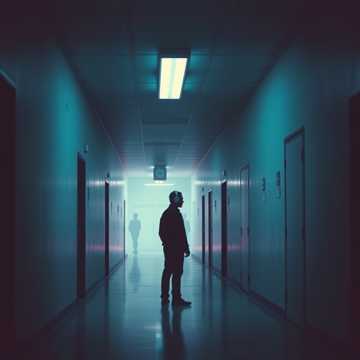
I hand the gun back.
Pop,Calmness,Anticipation,Male Voice,Male singer,Slow
00:00 / 00:00
Lyrics
I hand the gun back.
[Pause]
And I walk away.
[Pause]
That decision takes five seconds.
[Pause]
But it saves me.
[Pause]
I’m not brave.
[Pause]
I’m aware.
[Pause]
Let me take you back.
[Pause]
I’m sixteen years old.
My life feels out of control.
I’m angry.
Exhausted.
Tired of being overlooked.
[Pause]
Everything feels unstable.
And loss keeps showing up.
[Pause]
Then one night, a friend puts a gun in my hand.
He says,
“You want respect? This is how you get it.”
[Pause]
He’s about to rob a store.
[Pause]
In that moment, I know the risk.
My freedom.
And possibly my life.
[Pause]
Jail.
Injury.
Or worse.
[Pause]
Everything in me wants to react.
To move fast.
To prove something.
[Pause]
But I pause.
[Pause]
Not because I’m fearless.
[Pause]
But because awareness shows up.
[Pause]
Images hit my mind.
A cousin already in jail.
A friend shot months earlier.
Both from choices made in moments like this.
[Pause]
And in that moment, I realize something.
Every choice has a cost.
Awareness lets you see it early.
[Pause]
We wait for pain to teach us
what awareness could have shown us sooner.
[Pause]
Most people hear a story like that and think,
“That was extreme.”
[Pause]
But the risk wasn’t the gun.
It was waiting until everything was dangerous
to finally pay attention.
[Pause]
We’ve been taught that failure is the best teacher.
That pain is how wisdom shows up.
[Pause]
But that belief only works
when the cost is small.
[Pause]
Because not every mistake is survivable.
Not every failure comes with a second chance.
[Pause]
The real question isn’t whether failure teaches.
It does.
[Pause]
The question is why we keep waiting for pain
to teach us what awareness could show us sooner.
[Pause]
When I say awareness, I don’t mean personality.
I don’t mean intelligence.
I don’t mean being calm all the time.
[Pause]
Awareness is noticing what’s happening
in and around you
before you move.
[Pause]
That’s it.
[Pause]
Noticing gives you choice.
[Pause]
And without it, reaction takes over.
[Pause]
Think about how people are trained
in high-stakes professions.
Pilots.
Surgeons.
Engineers.
[Pause]
In those fields, mistakes don’t come with motivational quotes.
They come with serious consequences.
[Pause]
For example, in aviation, pilots are not trained to learn by crashing planes.
[Pause]
Because in environments like that,
failure is too expensive to be the teacher.
[Pause]
So they are not trained to fail their way forward.
They’re trained to notice risk early.
[Pause]
To slow things down.
To read warning signs.
To catch problems
before damage happens.
[Pause]
They don’t do this because they’re smarter.
They do it because the cost is too high to learn the hard way.
[Pause]
In everyday life, we don’t treat decisions that way.
[Pause]
Because pressure changes how we think.
[Pause]
Under pressure, speed feels safe.
Reaction feels easier.
[Pause]
Research on how the brain works shows that
when pressure hits,
we look for relief, not clarity.
[Pause]
So we move.
We react.
We push through.
[Pause]
And when things fall apart,
we call it a lesson.
[Pause]
But awareness didn’t fail.
It never got a chance to show up.
[Pause]
This doesn’t only happen in extreme moments.
[Pause]
It happens right before you speak.
Right before you agree.
Right before you send that message.
[Pause]
Nothing dramatic.
Just a moment.
[Pause]
And that moment decides
whether you react
or choose.
[Pause]
When you notice what’s happening in and around you,
you interrupt the reaction.
[Pause]
That’s where damage is avoided.
[Pause]
So why don’t we do this more often?
[Pause]
Because noticing is uncomfortable.
[Pause]
It asks us to slow down
when everything in us wants to move.
[Pause]
So we skip it.
[Pause]
And discomfort gets delayed
until it shows up as consequence.
[Pause]
When people see clearly,
they stop reacting on autopilot.
[Pause]
Not because they’re wiser.
Not because they’re fearless.
[Pause]
But because they noticed.
[Pause]
That’s what saved me at sixteen.
[Pause]
I noticed what was happening in me.
I noticed what was happening around me.
[Pause]
And because I saw it clearly,
I chose on purpose.
[Pause]
That’s what this talk is about.
Not failure.
Not pain.
[Pause]
But clarity before reaction.
Choice before damage.
[Pause]
Failure is not the best teacher.
[Pause]
Awareness is.
[Long pause]
Thank you.